
风和日丽
Chinese teenagers flock to tech frontline to touch the future amid AI study-tour boom_我的网站

一 |
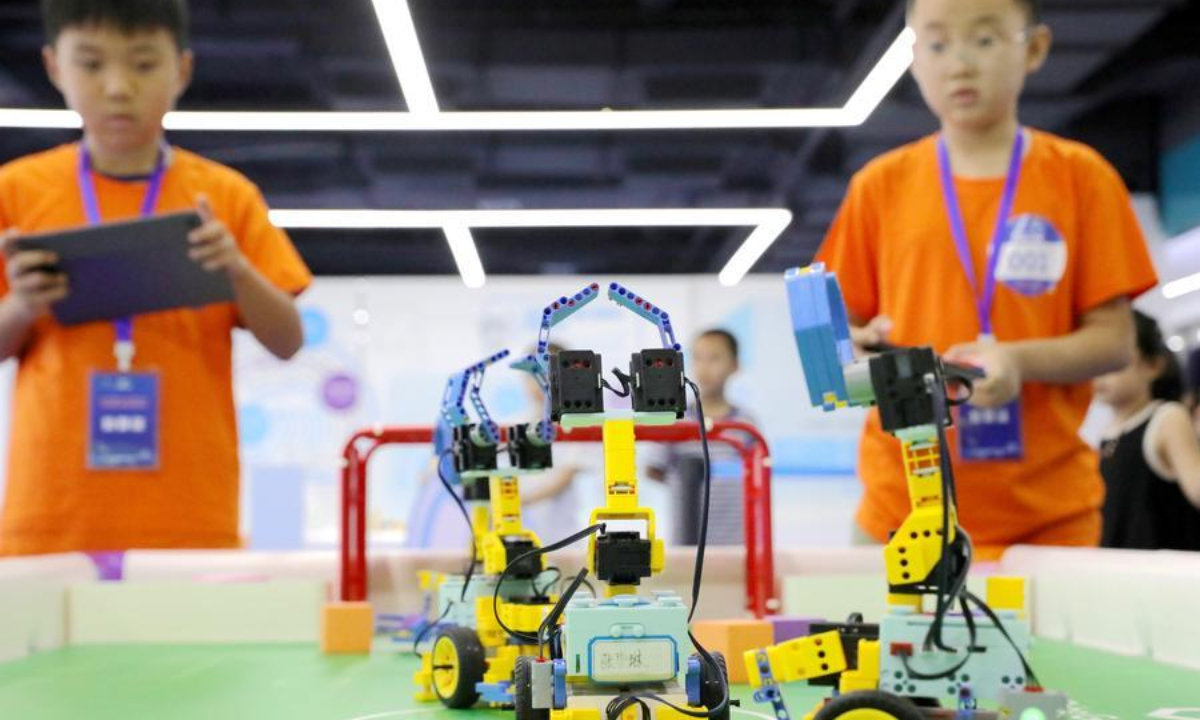
At a nearby workbench, nine-year-old Zhang Qihang was busy assembling a robot of his own. "Building robots is awesome! I can let my imagination run wild," he said, beaming with excitement.
This was the scene at an artificial intelligence (AI) summer camp -- part of a new wave of study tours gaining traction across China. Moving beyond textbooks, students are flocking to tech giants, university labs and science centers, eager to get hands-on experience with cutting-edge AI technologies and see firsthand how the future is taking shape.
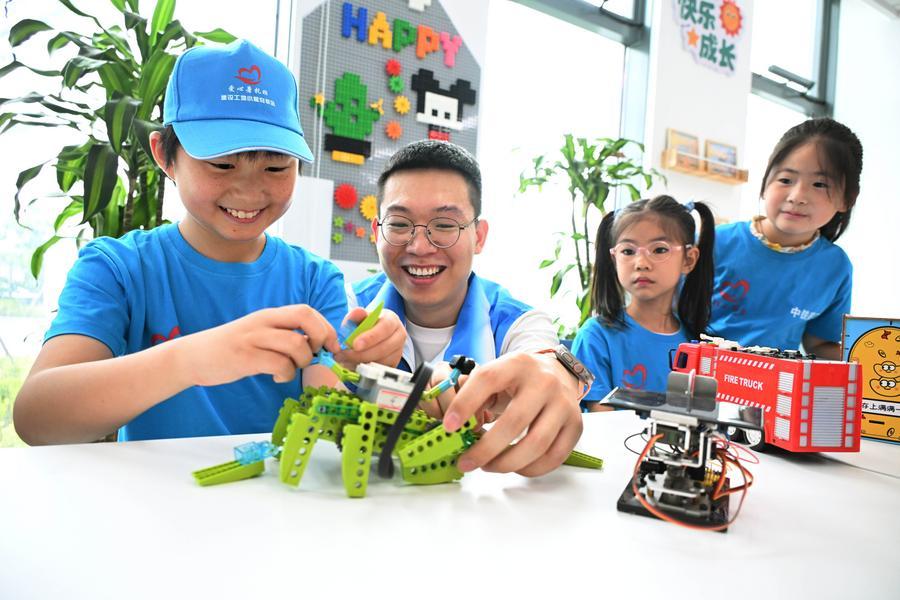
AI STUDY-TOUR BOOM
During this summer vacation, AI-themed study tours have begun to gain ground, with bookings surging 370 percent year on year, according to online travel platform Ctrip.
To tap into the growing demand for AI-focused tech tourism, a travel agency based in Nanjing, east China's Jiangsu Province, began adding visits to technology companies to its trip programs last summer. "On our Shanghai-Hangzhou independent study tours, AI-related activities now account for more than 80 percent of the itinerary," founder Zhu Ping said.
The boom is unfolding against the backdrop of China's broader AI boom, powered by a wave of homegrown models and applications. For a growing number of Chinese teenagers, AI tools such as DeepSeek, Kimi and Doubao are becoming familiar companions in their everyday lives.
The number of AI enterprises in China had surpassed 6,000 last year, and the output value of the core AI industry was projected to exceed 1.2 trillion yuan (about 177 billion U.S. dollars) during the same period, representing a year-on-year increase of nearly 30 percent.
Moreover, China was home to more than 140 humanoid robot developers in 2025, with shipments reaching 14,400 units -- accounting for 84.7 percent of the global market, according to an industry research report.
To help children prepare for an AI-driven future, China unveiled an "AI Plus Education" initiative earlier this year, encouraging schools to take AI learning beyond the classroom through after-school programs and hands-on activities. The goal is to help students understand and use AI properly, while sparking curiosity, nurturing creativity and honing their critical-thinking and problem-solving skills.
Today, the AI study-tour wave is sweeping through China's schools, as primary and secondary schools incorporate it into their educational programs. Parents are taking their children into the heart of the tech industry to see how AI transforms the real world.
China's tech-tourism boom is also drawing international visitors keen to get a close-up look at the innovation behind "Made in China."
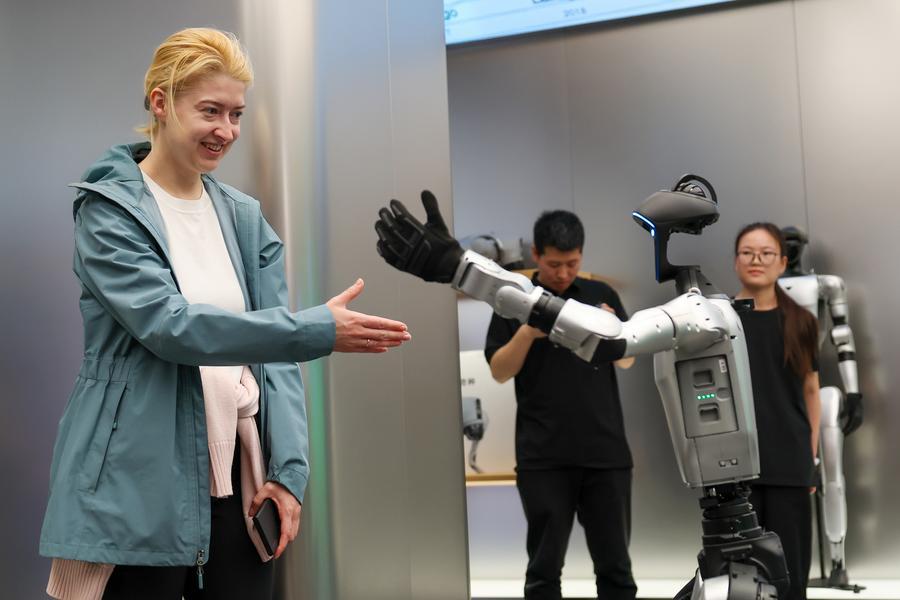
Since opening in Shanghai in May, Unitree Robotics's first embodied intelligence experience store in Asia has attracted many foreign visitors.
Victoria, from Denmark, visited the store last month. "I've seen some of the dancing videos, but it's really cool to see them in real life," she said, viewing the development of AI and robotics in China as "revolutionary, new and exciting."
FROM AI USERS TO AI CREATORS
Today's children are growing up as AI natives, already fluent in AI tools. But AI study camps are opening a new window onto how the technology is reshaping the world around them and how they can use it to make a difference.
For Liang Yiduo, a Beijing middle school student, an AI summer camp run by internet giant NetEase offered a fresh perspective on the AI technology he thought he already knew.
"I realized that large language models aren't just chatbots or simple tools," he said. "They can be assistants that work alongside you and help you create things tailored to your needs, like 'claws.'"
"The goal of the study camp is to help children move from simply using AI to understanding it, creating with it and even building their own AI agents," said Wang Lijin, director and founder of Beijing Venus Future Education Consulting Center, which assists NetEase in running its study camps.
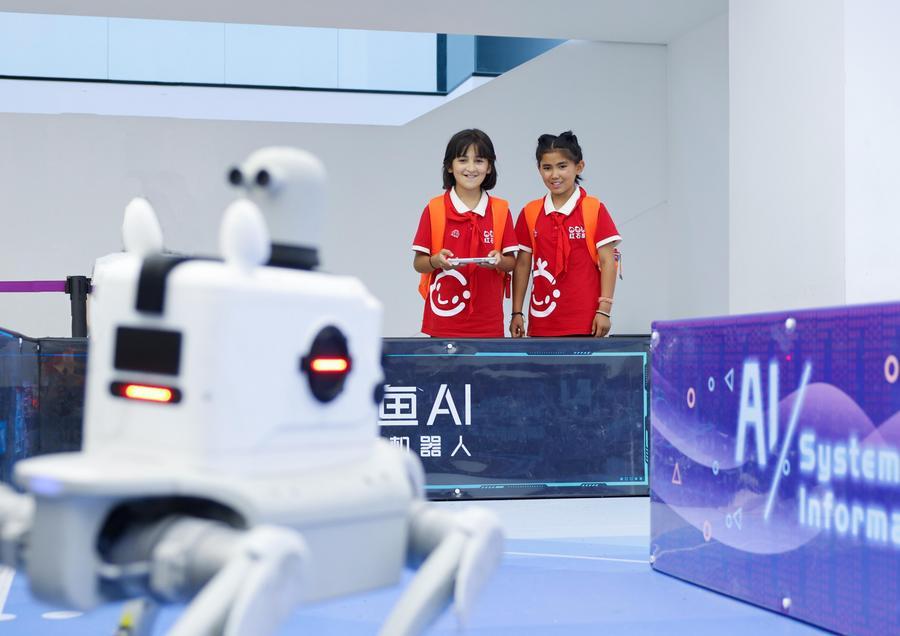
Some study tour organizers design programs around students' interests and abilities, aiming to spark curiosity and encourage deeper thinking.
Shanghai Qingbao Robot Co., Ltd., for example, offers students who enjoy building things the chance to assemble robotic arms and explore the mechanics of shoulder and neck structures. It also gives students a comparative look at the robotics and AI industries in China, the US, Europe and Japan, helping them gain a more balanced understanding of China's strengths and shortcomings.
Wang Lei, the company's chairman, believes that study tours can greatly broaden students' horizons in science and innovation. "Through immersive study tours, students start thinking for themselves about how robotics can be applied to everyday life, from unmanned retail to automated pharmacies," he said.
Some students are taking it a step further, learning to spot real-world problems and use AI to develop solutions.
In the southern Chinese city of Shenzhen, a group of students spent six days in a camp turning ideas into an AI-powered product.
"I've realized that learning AI isn't about showing off what I can do with it, but about using it to solve real problems for others," said one team member. "I want to keep learning AI so I can help more people in the future."
。

二 | 8 月 25 日消息,华硕 (ASUS) 今日表示,其 3 款支持新一代 WLAN 规范 Wi-Fi 8 (802.11bn) 的无线路由器将“很快上市”。

三 | 华硕的 Wi-Fi 8 初期阵容包括两款电竞路由器 ROG Rapture GT-BN98 Pro、ROG Rapture GT-BN98 和家用全屋 MESH 组网系统 ZenWiFi BN12。

四 | ROG Rapture GT-BN98 Pro 面向美国和加拿大市场,频段组合为 6GHz + 6GHz + 5GHz + 2.4GHz;覆盖欧洲中东北非 (EMEA)、亚洲太平洋 (APAC) 等市场的 ROG Rapture GT-BN98 则调整为 6GHz + 5GHz + 5GHz + 2.4GHz。无论是否拥有 Pro 后缀,这两款产品提供了 2 个 10GbE、4 个 2.5GbE、1 个 1GbE,支持 20Gbps 链路聚合。ZenWiFi BN12 采用三频设计,可提供 19Gbps 带宽,配备 8 根内置天线和 12 个高功率 FEM 模块,覆盖面积可达 7,000 平方英尺(注:约 650.3 平方米),具备 2 个 10GbE + 3 个 2.5GbE 的连接能力。2026 科隆游戏展专题。
Current article:http://zs7pp2.licuqiangraosuiheizhua.pics/ke0tw1/20260826/109555.html
Published on:01:22:16
 新西兰国会系统遭中国黑客攻击?中使馆:已提出严正交涉
 “十五五”时期我国将促进6G产业成熟和生态构建,“十五五”时期我国将促进6G产业成熟和生态构建
 全球市场:美股三大指数涨跌不一 存储、光通信板块下挫 国际金价延续涨势
 新闻连环画 | 追光爷爷
 2025香港车博会:带空气悬架的皮卡ETERRON 9发布/MGS5 EV亮相
 “白海豚爱心妈妈”赋能培训开班